Elena Krause · 20 October 2026
Poland Leads Swift Curriculum Integration, Fueling Eastern European Tech Education Partnerships
Poland has moved forward with plans to incorporate Swift programming into its national technology education standards, and this step has prompted neighboring countries to explore similar frameworks for their own systems. The initiative aligns with broader efforts to build digital skills across the region, where governments seek to prepare students for technology-driven job markets. Data from the European Commission's education reports indicate that tech literacy programs in Central and Eastern Europe have expanded by 25 percent over the past five years, with coding languages like Swift gaining traction in secondary and vocational tracks.
Foundations of the National Framework
Ministry officials in Warsaw outlined the integration plan during meetings held in October 2026, where they detailed how Swift would fit into existing computer science curricula starting at the secondary level. The approach combines core programming concepts with practical projects that emphasize app development, data handling, and user interface design. Researchers at Polish universities contributed input on age-appropriate modules, while industry partners supplied case studies drawn from real software deployment scenarios. This structure allows schools to adopt the material without overhauling their entire schedules, since lessons build on mathematics and logic courses already in place.
Funding allocations support teacher training sessions and equipment upgrades, with allocations directed toward rural districts that previously lacked access to advanced coding tools. Figures from the Polish Ministry of Education show that over 1,200 educators participated in initial workshops by late 2026, and completion rates for certification modules reached 87 percent in the first cohort. The program also incorporates open-source resources from the Swift community, which reduces costs while maintaining consistency with international standards used by developers worldwide.
Regional Responses and Joint Initiatives
Countries such as Slovakia, the Czech Republic, and Hungary have responded by forming working groups to adapt elements of the Polish model for their own systems. Observers note that these discussions focus on shared challenges, including language localization for educational materials and alignment with European Union digital competence frameworks. A joint statement issued after a regional summit in Bratislava highlighted commitments to exchange curriculum templates and host cross-border student competitions that feature Swift-based projects.
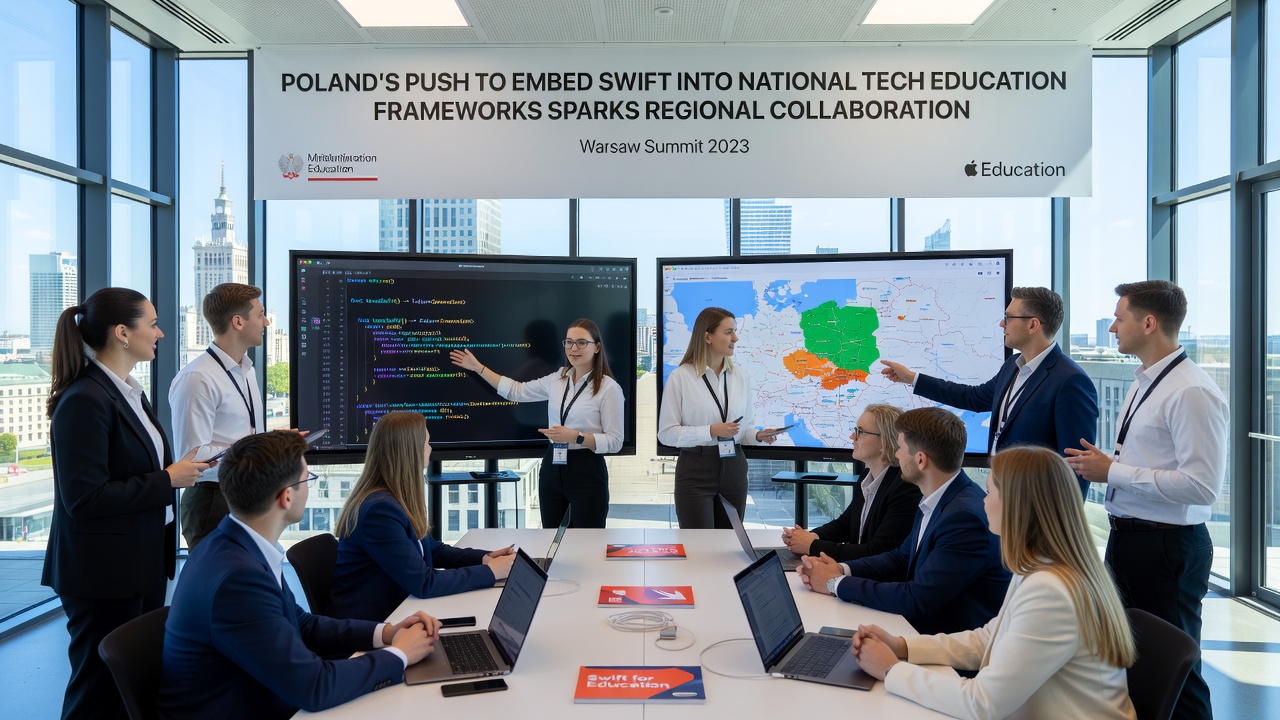
What's interesting here is how the Polish push has coincided with existing EU-funded networks that already promote technology education across member states. Those networks, documented in reports from the European Commission, provide platforms for sharing best practices and evaluating outcomes through standardized assessments. In parallel, academic institutions in the region have begun pilot exchanges where students from different nations collaborate on Swift applications that address local community needs, such as public service apps or environmental monitoring tools.
Workforce Preparation and Industry Links
Industry reports indicate that demand for Swift-proficient developers continues to rise in mobile and enterprise sectors, which has encouraged vocational schools to embed the language into certification pathways. Partnerships with technology companies supply internship placements, allowing students to apply classroom knowledge in professional settings. Data compiled by regional labor agencies reveal that graduates from programs with integrated coding languages show higher placement rates in IT roles compared with peers from traditional tracks.
One study released by a consortium of Central European universities found that early exposure to Swift correlated with improved problem-solving scores on standardized tests, although the researchers emphasized that multiple factors influence such outcomes. The findings align with broader patterns observed in other countries that have introduced modern programming languages into secondary education, including initiatives tracked by the Organisation for Economic Co-operation and Development.
Implementation Steps and Ongoing Adjustments
Rollout timelines call for phased adoption, beginning with urban centers that already possess necessary infrastructure and then extending to additional regions through 2027. Evaluation mechanisms include student performance metrics, teacher feedback surveys, and periodic reviews by independent education analysts. Adjustments occur based on these inputs, such as refining lesson pacing or expanding access to cloud-based development environments. Government updates confirm that monitoring committees meet quarterly to track progress and address gaps in resource distribution.
Challenges around teacher retention and equipment maintenance have surfaced in early reports, yet collaborative platforms established with regional partners help mitigate these issues through shared troubleshooting resources and peer mentoring programs. External evaluations from academic sources outside the region, including studies referenced by the National Science Foundation in the United States, underscore the value of sustained professional development when introducing new technical content at scale.
Conclusion
Poland's structured incorporation of Swift into national tech education continues to influence discussions across Eastern Europe, where governments weigh similar steps to strengthen digital competencies. The resulting collaborations emphasize practical resource sharing, joint assessment methods, and connections to evolving workforce requirements. As implementation advances, data collection efforts will provide clearer pictures of long-term effects on student outcomes and regional innovation capacity.